Supercharging Federated Learning at the Edge
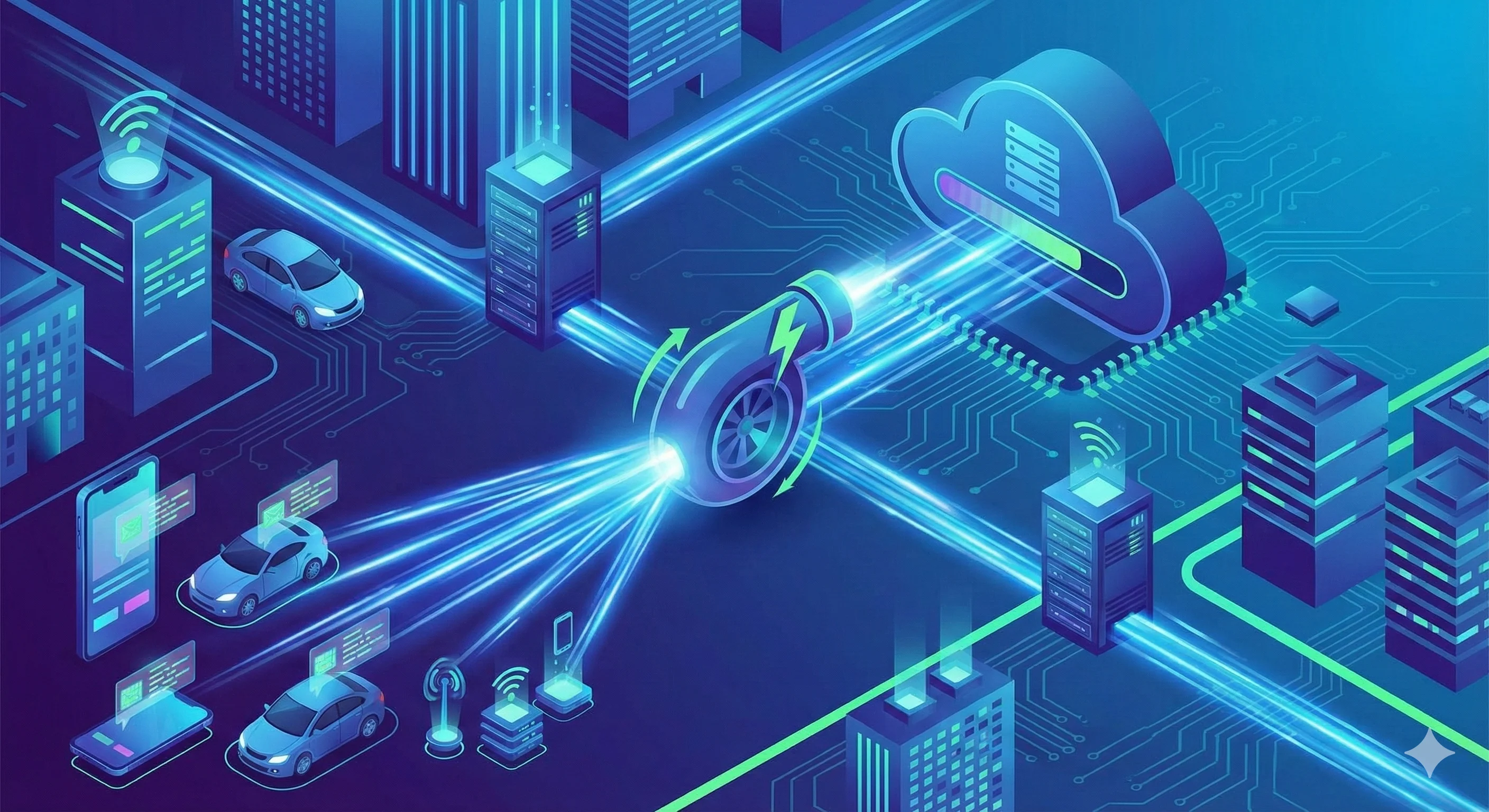
Federated Learning (FL) is changing how we train AI, allowing us to build models without ever moving raw user data. But in Mobile Edge Computing (MEC) networks, the heterogeneity of devices—varying battery life, CPU power, and bandwidth—creates a massive bottleneck.
The Bottleneck
If you wait for the slowest device to finish training, your whole network stalls. The challenge is balancing two competing needs:
- Computation: How fast a device can process its local data.
- Communication: How fast it can upload the updated model to the server.
The Solution: Joint Optimization
In my recent research, we proposed a joint optimization problem that tackles resource allocation and client selection simultaneously. Instead of random selection, we mathematically determine which clients maximize convergence speed based on their current states.
| Parameter | Function |
|---|---|
| Bandwidth (B) | Allocating frequency slots to clients with poor connections to speed up transmission. |
| CPU Cycles (f) | Adjusting the computation frequency to balance energy consumption with delay. |
| Selection (α) | A binary indicator deciding if a client participates in the current round. |
Why It Matters
Efficiency is doing things right; effectiveness is doing the right things.
— Peter Drucker
By formulating this as a minimization problem for total delay, we can significantly accelerate how quickly the model converges to a high accuracy, making real-time edge AI a reality.